


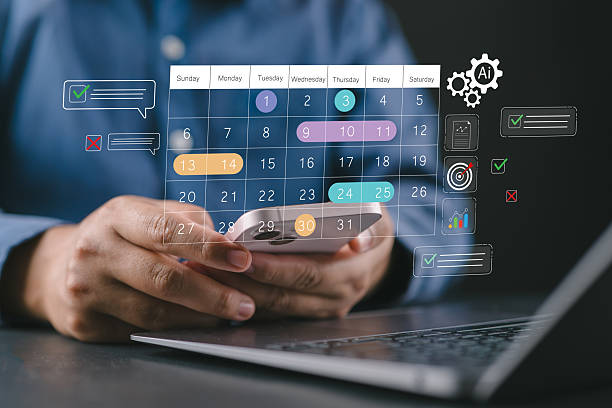
By the year 2026, the amount of digital information is simply overwhelming enough to render standard to-do lists almost redundant. What defines the modern age of productivity is the so-called Agentic Task Management, which does not simply show you what to do but actually assists you in doing it. These new tools use Large Language Models (LLMs) and autonomous agents to contextually understand, make predictions based on deadlines, and even write back or write in your style. By taking away the cognitive burden of organization out to an AI partner, you will have the hours of your week to think about strategies and personal well-being.
The Transport to the Autonomous Task Performance
The most remarkable shift in day-to-day management in 2026 will be the adoption of the concept of the passive to the active AI. The old apps required you to enter data, whereas the new popular apps anticipate your need and scan your emails, meeting transcripts, and chat messages to determine what is on your action list before you even notice it is there. The size of this layer is autonomous and it operates in the background so that nothing can slip through the cracks. It is a digital Chief of Staff, where you can work on the quality of what you are doing on a high level, and not on the administrative overhead of monitoring it.
Context-Sensitive Prioritization Engines
The issue of the urgency trap, i.e. tendency to address the latest task instead of the most significant one, has been resolved by modern AI tools. These engines can dynamically rearrange your schedule by analyzing your long-term objectives and past working trends in accordance with your present energy levels and your approaching deadlines. To take one such example, when the AI notices that you produce the best in the morning, it would automatically schedule this time as a time of deep and complex work and reschedule the administrative work to the afternoon. With this amount of personalization, you will not be going by a list every day, but a plan to succeed.

The best AI Assistants to Manage Your Personal Workflow
Implementing an AI assistant in your personal life will minimize the stress of making the daily transition and help you remember what is really important.
- Motion: It is billed as the best AI task manager by the year 2026, employing a framework of so-called constant rescheduling to automatically shuffle your tasks about your appointments, so that you never have to miss a deadline.
- Saner.ai: This platform has become one of the most popular brain dumping tools because users input notes or voice records and watch them automatically sorted into tasks and projects that can be put into practice.
- Reclaim.ai: This is specifically calendar-dense roles and is a calendar remover that understands how to secure your focus time and provides an automatically scheduled slot where you can consistently build a habit of exercising or meditating.
Artificial Intelligence to Work Jointly
In cases of a group, it is usually a struggle to align disparate priorities. In 2026, collaborative AI tools will serve as a sort of connective tissue among team members so that everyone is on track without having to hold frequent status meetings.
- ClickUp Brain: This application is a knowledge base that serves as a central point, any team member can pose a question such as What are my priorities today? and obtain a contextually-grounded immediate answer.
- Asana intelligence: It focuses on Smart Summaries, the transformation of long comment threads and project updates into executive level snowfalls in a few seconds, to help you know what happened.
- Taskade: Taskade, which has been renamed to be called AI Agents, is the platform that enables teams to create their own digital assistant that processes particular workflows, e.g., building outlines of content or monitoring the milestones in the project.
- Wrike: It offers predictive work intelligence, i.e. is capable of identifying risks or delays in the project in advance (weeks before they occur), enabling the affected team to make a pivot.
Smart Meeting and Notes Realiseer
Gone are the days of manual taking of minutes. In 2026, meeting assistants are not only transcribers but also interpreters. These tools are able to separate a fluent remark and a solid promise, and will automatically fill in your task manager with the information. This makes sure that the energy of a brainstorm is captured instantly into a planned plan. You will be able to be more present and engaged and therefore it will greatly improve the quality of collaboration and decrease the so-called Zoom fatigue because you will not need to multitask during calls.
Optimization of Communication and Email
Email is still a significant source of productivity loss, but finally AI-native clients are resolving the issue of inbox overwhelm. These applications can be used to write responses in your own voice and style using natural language processing, and all it takes is a single press to send it. There are also the features of sorting similar discussions and outlining the most important requests, so that you use the little time you have to reply to the messages that really move the needle. This change in processing, i.e. reading and sorting, to reviewing and approving, makes email a complete necessity in your workflow that is optimized.
Conclusion
The AI tools of the future, 2026, should be the ones that realize human time is a costly and scarce resource. Through adopting independent action, situation-constrained high praise, and smart communication you will be able to shift out of a state of being busy-sss to becoming truly productive. Such tools are not intended to cause the elimination of human effort but to make it more effective- to relieve you of the repetitive, low-value work that machines can perform far better and instead concentrate on the work that you are best at. With the progressing digitization of the world, the way to remain ahead will be to keep an open intellect and be willing to collaborate with AI to have a much more adjusted and successful life.
Frequently Asked Questions (FAQs)
To have AI read my emails and documents is safe?
In 2026, the most popular tools contain Private AI or On-Device processing to guarantee that your data is not used to train models open to everyone. Ensure that you look at SOC 2 and GDPR compliance every time you select an app.
When will such AI tools understand my habits?
The average time that it takes to train most of the contemporary AI task managers is 7 to 14 days of regular use before properly forecasting your working habits and providing the best schedules.
Is it possible to utilize several AI tools simultaneously?
In spite of the fact that it is conceivable, a superior choice would be to utilize a center such as Idea or ClickUp that can be coordinated with other applications. Over the utilization of incoherent AI apparatuses may cause computerization weakness and spasmodic data.
Are these tools effective among people with ADHD?
Indeed, such tools as Saner.AI and Motion are specifically commended to support neurodivergent individuals by alleviating the issue of decision paralysis and offering painless AI-assisted nudges.
