


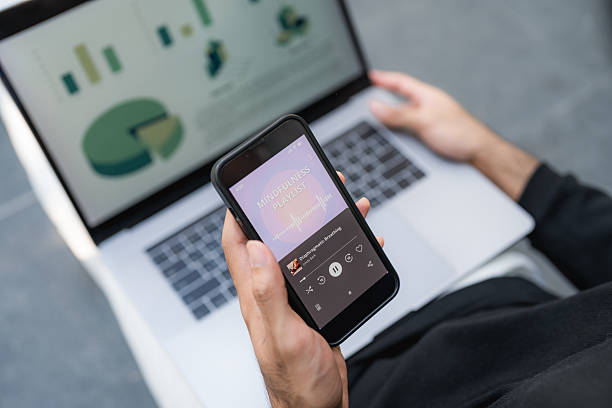
By 2026, the digital world will become an always-on reality, and professional and personal life is more closely tied up than ever. Digital well-being is no more merely the amount of minutes spent on the screen but rather the nervous system controls the conscious effort to regulate the physiological stress of digital overstimulation. As AI-based algorithms become increasingly convincing, to preserve mental health, the proactive approach must make digital hygiene a key aspect of health. Through conscious routines we will be able to make technology a source of fear instead of a form of emotional stability and cognitive lucidity.
Governing Your Nerves with Micro-Rest
Online interaction is usually hectic, causing our bodies to be at the alert call always, resulting in the so-called quiet burnout. According to mental health experts in 2026, the regulation of the nervous system is of more importance than mere time management. Micro-rest practices, these short moments of 60 seconds when you can close your eyes or do a deep breathing, can be used to reduce the level of cortisol. This is because, by deliberately reducing your physiological reactions, you interrupt the process of technostress before it becomes a path to chronic anxiety. This refocusing is what makes the difference in that you will be controlling your energy throughout the day, not just your work.
Audit Your Digital Diet of Quiet Burnout
Our mental health is also dependent on what we read just like our physical health. Being a digital audit also implies following accounts that do not bring you joy; it is about evaluating the moods instilled in you by certain platforms.
- Find the Energy Drainers: Be aware of those applications that make you feel tired or irritable and reduce the amount of use.
- Curate to Inspirations: Subscribe to producers and feeds that will provide real value or emotional fulfillment.
- Unsubscribe to Non-Human Notifications: Use the No-Human option on promotional bots and other news aggregators to focus on human interactions.
This selective intake stops the drain of brain wealth experienced when one scrolls through doom continuously and is bombarded with information all the time.

Take Advantage of Privacy-First AI Wellness Tools
With the emergence of AI in 2026, there has arisen an extremely personalized mental health assistance. Nonetheless, the availability of easy chatbots and therapy apps with AI assistance brings threats to the issues of data privacy. Privacy-first AI tools can provide a guarantee that the information about your feelings is encrypted and is utilized only to help to make your life better. Such tools have the ability to provide real- time cognitive behavioural therapy (CBT) exercises and mood tracking so that early intervention can be taken before stress is too much to handle. Applied in a proper way, AI will serve as your 24/7 digital coach assisting you to keep a balanced mind.
Create Circadian-Friendly Technology Limits
The brain cannot be compromised by anything without sleep, and sleep is usually the first thing to give up to our gadgets. However, since 2026 the emphasis has changed to the use of circadian-friendly technology. The grayscale mode, which should be used at night, and the introduction of a bedtime curfew on everything screens are also beneficial in eliminating the repression of melatonin by artificial blue light. When you leave devices out of your bedroom, you are establishing a sleep haven that will enable you to get that deep restful sleep that your brain requires to be able to process the emotions and stay stable.
How to Be a Better Multi-Tasker
Ponders appear that it may take up to 23 minutes to re-focus after getting occupied by the computerized world. Battling this would be cruel learning to mono-task in 2026.
- Close Tabs: As it were, open a few tabs at a time to minimize visual clutter.
- Apply Center Modes: Utilize the local framework highlights to close down diverting applications in the handle of profound work.
- The 20-20-20 Run the show: After 20 minutes, you ought to gaze at something 20 feet absent (20) and rest your eyes and intellect (20).
These minor changes will go a long way in making a difference to you to minimize mental fatigue and will improve your efficiency and satisfaction.
Make Real-Time Social Connection the Priority
One of the most common causes of digital loneliness is passive consumption, which is scrolling through the feeds with no engagement. In 2026, well-being approaches will highly promote the substitution of likes with participation. Requesting video calls, voice notes, or face-to-face meetings is something that will give the social nutrition that textual pictures cannot. With the focus on real-time connections you will decrease the vulnerabilities of the so-called phubbing (leaving all other people to concentrate on the phone) and create a more robust and genuine support system that cushions your stress.
Create a Daily Mental “Anchor”
When the days are filled with digital activities, an experience of a grounding ritual is important to be psychologically stable. A daily anchor is a brief, deliberate activity, and has nothing to do with technology. This may be a morning stroll without a phone, a short time journaling or just sitting and having a cup of coffee in silent mode. These rituals serve as a finish line to your online workday, they are a signal to your brain that now is the time to depart work mode and switch over to recovery mode.
Conclusion
It is vital to investigate the advanced world in 2026 in an adjusted way, which infers the nearness of both advanced innovation and old rules of self-care. Advanced well-being is not an issue that can be settled once but a propensity of self-awareness and boundary-setting. Overseeing your anxious framework, examining what you perused, and emphasizing the esteem of in-person connections can offer assistance to shield your mental wellbeing forms from the weights of an always-on culture. It is vital to keep in mind that innovation is an instrument that ought to be utilized in life or maybe than a thing that directs your life. Start with a single little propensity nowadays, such as a screen-free morning, and see how your mental clarity and bliss begin to increment.
Frequently asked Questions (FAQs)
What is the AI Divide on digital well-being?
It defines the difference between the people who use AI in order to improve their well-being and those who become victims of AI-based addiction. Privacy-oriented wellness AI can be used to address this gap.
What is the use of Grayscale Mode in relation to mental health?
Gray scale mode reduces the addiction to your phone because it eliminates the bright colors that cause dopamine release in the brain, forcing you to set your phone down earlier.
Would I be any productive doing a digital detox?
Absolutely. Most of them find that the time spent in computerized detachment altogether moves forward efficiency in the long run as it makes a difference to dodge burnout and gives time to lock in more inventively.
What are digital wellness Somatic practices?
They are body-based practices, such as focused breathwork, stretching, which allow your body to release the physical strain that is present in your body after several hours of screen time.
