


Over the past week, residents across the Gulf have watched missiles and drones cross the night sky—sometimes followed seconds later by bright flashes as air-defense systems intercept them. In cities like Dubai and Abu Dhabi, videos of interceptions have spread quickly across social media, turning what is normally a largely unseen security architecture into something suddenly visible.
Authorities have urged people not to film or share footage online of interceptions or military activity, warning that such videos could reveal sensitive information about defense operations.
Iran has launched waves of missile and drones toward several Gulf countries in retaliation for US-Israeli strikes which killed Iranian supreme leader Ali Khamenei. These attacks have triggered air-defense responses across the region.
Governments from the United Arab Emirates to Kuwait and Bahrain have reported detecting or intercepting hundreds of missiles and drones in recent days targeting airspace, military facilities, and infrastructure.
Here is how each country has responded.
United Arab Emirates
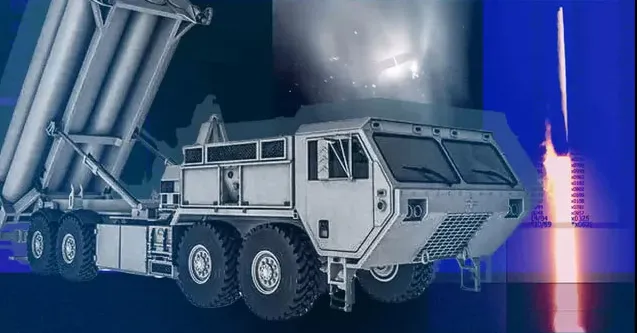
The UAE operates a layered air-defense network designed to intercept threats at different stages of flight. At the highest altitude sits the Terminal High Altitude Area Defense (THAAD) system, developed by Lockheed Martin, designed to intercept ballistic missiles during the final phase of their descent using a “hit-to-kill” method—destroying the target through direct impact rather than an explosive warhead.
Closer to the ground, Patriot missile-defense batteries developed by Raytheon provide another layer capable of intercepting missiles and other aerial threats at lower altitudes. Radar networks detect launches hundreds of kilometers away, allowing operators to calculate trajectories and launch interceptors within minutes.
As of writing, the UAE Ministry of Defense said that 196 ballistic missiles have been detected heading toward the country since the escalation began on February 28. Of those, 181 were destroyed by air-defense systems, 13 fell into the sea, and two missiles landed inside UAE territory. The attacks resulted in three fatalities and 78 injuries, most caused by falling debris rather than direct missile impacts.
Attacks have also affected digital infrastructure. Amazon Web Services facilities in the UAE and Bahrain were directly struck, causing structural damage and power disruptions.
The high interception rates highlight the effectiveness of the region’s layered defense architecture—but they also reveal the strain placed on these systems when attacks occur in repeated waves.
“I would assess Gulf missile-defense performance as tactically capable but strategically stressed,” says Andreas Krieg, an associate professor at the Department of Defense Studies at King’s College London.
“The real story of this escalation is not whether the Gulf can intercept,” he says. “It is whether it can sustain interception at the tempo these attacks create.”
Missile defense, Krieg notes, is increasingly a contest not just of technology but of endurance. Interceptors can cost millions of dollars each, while many drones used in attacks cost a fraction of that amount.
In prolonged conflicts, maintaining interceptor stocks and coordinating defense across multiple sites becomes a major strategic challenge. “Once you get into repeated raids, mixed salvos, and long-duration drone pressure, the limiting factor becomes magazine depth, resupply speed. and the economics of using very expensive interceptors against cheap, persistent threats,” he says.
The UAE has spent more than a decade building its missile-defense architecture, investing heavily in systems such as THAAD and Patriot and integrating them with regional radar and early-warning networks.
Saudi Arabia
Saudi Arabia operates one of the largest air-defense networks in the Middle East, shaped by years of defending against missile and drone attacks targeting its cities and energy infrastructure.
The kingdom relies heavily on the Patriot missile-defense system, supported by radar networks and additional air-defense assets designed to intercept ballistic missiles and aerial threats approaching major population centers and oil facilities. It also operates the PAC-3 MSE interceptor, a more advanced Patriot missile developed by Lockheed Martin, designed to destroy incoming ballistic missiles through direct impact.
