


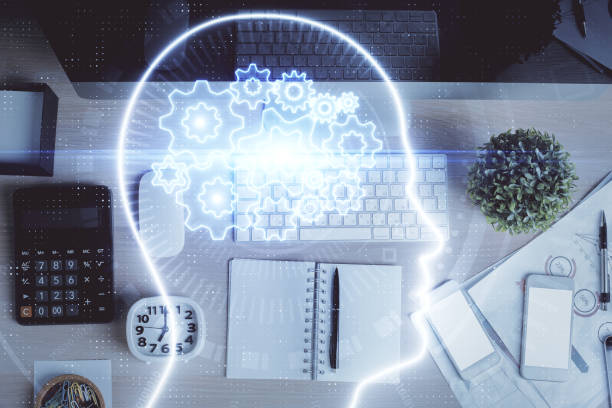
The digital workspace has become a space of Agentic Productivity in 2026. We are leaving behind tools which just sit and wait to be fed and to AI agents which actively control our workflows, research, and communications. Modern productivity is aimed at reaching the state of continuous flow by transferring repetitive and administrative, as well as cognitive-intensive, tasks to specialized digital assistants. Regardless of your profession as a creative, a manager, or a student, a proper AI stack is no longer a benefit, but a requirement to balance between work and life in an ever more automated world.
The Age of the AI Chief of Staff
The largest change of 2026 is the advent of the AI assistants who are serving as the personal Chief of Staff. These tools not only archive information, they know what your projects are, how urgent your email was or how regular your energy levels are. Assimilating into your communication channels and calendars, they can filter your day on a pre-triage basis even before you turn on your computer to make it so that when you wake up in the morning, you have a clear prioritized focus on your day and not a winding list of notifications to look through. This proactive management will give you time to save hours of decision-making time per week. With the intelligent agent taking the task of thinking about working, you would minimize the mental exhaustion that causes burnout in the afternoon.
Multimodal Intelligence to a Seamless Creativity
In 2026, creativity is not confined to individual apps of text, images, and video. The new multimodal tools enable you to switch the mode to various mediums on the same interface by using a single context to ensure uniformity. When you give a description of a marketing concept, the AI would also write the copy, create the illustrations and even provide background music. This allows the ideas and the execution to come together without much friction which opens up the possibility of creating something through vibe where the technology takes care of the technical impediments and you are able to concentrate on the vision and the story behind your work completely.

AI Assistants That You Need in Your Everyday Output
To remain competitive and on track in 2026, you should have a lean team of assistants to do the hefty task of content generation and research.
- ChatGPT (GPT-5.1): Continues to dominate in the industry as a general-purpose reasoning system, writer of complex documents, and conversational sounding board of new ideas.
- Claude (Pro and Max): This is what most people prefer because of its better reasoning or human-like capability of reasoning and handling huge research papers or massive codification projects with high precision.
- Confusion: The search engine that one can rely on when they need facts and which also delivers the answers cited in real-time, cutting the noise of a traditional search engine.
- Gemini (Google Workspace): It is invaluable to other users, who spend all their time in Docs and Gmail, giving accessible more of a summary of long threads and writing up responses in your own individual style.
Scheduling and Automation Giants
It is equally important to manage when you work like what you are working on. These tools can save your time with the help of AI and automate the connections of your different apps.
- Zapier Agents: These are smart coworkers that automatically perform multi-step tasks throughout all your technology systems, e.g., writing a client report after a project is designated as complete in Asana.
- Reclaim.AI: This is a defensive calendar (blocks your focus time) and guardian of your personal schedule (exercise or lunch) against encroaching meetings.
- Motion: This is an angry AI scheduler that will grab your to-do list and will physically build up your schedule every day, constantly jumbling it with new priorities appearing.
- Clockwise: It is concerned with harmony within the team: It restructures the meetings into the most efficient blocks to achieve the highest possible levels of continuous deep work among all members.

Circumference and Co-operation Intelligence
Meetings are usually the most significant productivity killer, yet in 2026, the meetings have now evolved to be the source of organized information. The AI meeting assistants now deal with the whole process of a call, both pre-call preparation and follow-up. Otter.ai and Fireflies are tools that offer real-time texts and immediate summaries, and you are able to be completely engaged in the dialogue. More sophisticated tools such as Granola have introduced note-taking which are bot-less to capture the important decisions and action points without the interference of an electronic guest so that every hour spent in a meeting produces explicit, operational tasks.
Individual Knowledge and Reflection Aids
Productivity does not only concern output, but the quality of your thinking as well. In 2026, a new type of tool to assist in reflection on knowledge and its organization has been created. Life Note and NotebookLM can be used to store your personal journals, research papers or voice memos and communicate with your past. These will be able to reveal your long term patterns in thinking which will enable you to see the big picture with regard to your personal and professional development.
Conclusion
The AI devices that you must possess in the year 2026 are the devices that would make you a task-manager into a task-director. With AI to manage your schedule, brief your meetings and perform your work routines, you get the space in your mind to be able to innovate. These tools do not only save time, but they also save the best thing you have, which is your attention. When you are developing your own AI stack, keep in mind that you are not trying to accomplish more, but to accomplish better and receive the time to live your personal life again. Begin by introducing a single autonomous agent into the workflow in the present time and get the immediate relief of a reduced cognitive load.
Frequently Asked Questions (FAQs)
What is the best AI in a student and in a professional?
NotebookLM and Claude have been observed to be more useful to students in research and synthesis, whereas Motion and ChatGPT Plus are often more useful to professionals in managing the tasks and drafting quickly.
Do these tools cost a lot to service?
Most offer a “freemium” model. A Pro stack typically costs between 20 and 50 a month and this has become a firmly accepted expense to most users as an investment in their own productivity.
Will AI tools be able to cope with creative writing sounding robotic?
By 2026 the state of the craftsmanship in such devices as Claude 4 and Jasper has progressed to the point where such applications can reliably duplicate the voice of a specific brand or enthusiastic request to a degree essentially imperceptible to the client.
